

Nobody warns you about the waiting. You’ve just lost a parent, maybe a sibling, and somewhere between the funeral arrangements and the grief, someone drops a manila envelope on the table and says the house has to go through probate. What happens next can take anywhere from 9 months to several years, cost tens of thousands of dollars in fees, and involve a judge confirming your sale price in open court. I’ve been buying houses across the state for years, and selling a probate house in California comes with more moving parts than almost any other transaction. This guide lays out exactly what to expect from probate sales, start to finish.
When Is a Probate Sale Necessary in California?
Not every inherited property ends up in probate court. A house held in a living trust, for example, passes directly to the successor trustee without any court involvement. Properties held in joint tenancy with right of survivorship follow the same rules. Probate kicks in when real property is titled solely in the deceased person’s name and isn’t shielded by one of those legal structures.
California’s AB 2016 changed the equation for modest estates by raising the small estate threshold to $750,000 for primary residences, up from the previous limit of $184,500. The change applies to deaths occurring on or after April 1, 2025. So if your inherited home falls below that value and qualifies, you may be able to skip the full probate process with a simplified court petition, which can save months of waiting.
A probate sale is a court-supervised sale of a property after the owner’s death, and it’s typically necessary when a property isn’t protected by a trust or other legal means. If there’s no will, if the will is contested by heirs, or if the estate carries debts that need to be settled before assets transfer, a probate court will oversee the whole process. Every beneficiary and creditor gets a seat at the table, which is part of why it takes so long.
How Does a Probate Sale Work in California?
Paperwork, frankly, is the easy part. What actually slows things down is the court calendar, the creditor claims period, and the layers of approval that sit between you and a closed escrow.
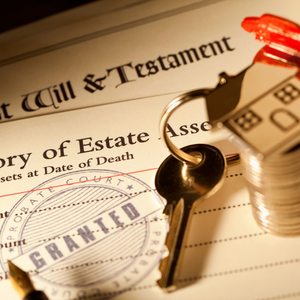
The executor (or administrator, if there’s no will) files a probate petition with the superior court in the county where the deceased lived. A hearing date is then set by the court roughly 30 to 45 days out. From there, a probate referee steps in to appraise the real property and all other estate assets. Creditors have 4 months from the date of the executor’s appointment to file claims against the estate. The clock doesn’t pause for anyone.
Once the appraisal is done and the creditor period winds down, the executor can list the property. Here’s where the path splits. Whether you have IAEA authority under California’s Independent Administration of Estates Act determines how smoothly the sale goes. The IAEA authority lets the executor sell the property without returning to court for a confirmation hearing. A will can grant it directly, or you can request it in the probate petition, and if all heirs consent, the court almost always approves it.
Without IAEA authority, every offer must be returned to a judge for confirmation, and competing buyers can show up at that hearing and outbid the accepted offer. With the IAEA authority, the sale looks much closer to a standard transaction. Getting that authority established early is one of the first things I’d push any executor to do, because it removes a layer of uncertainty that can spook buyers right when you need them committed.
How the Court Supervises Probate Sales and Sets the Price
A seller I worked with in the San Gabriel Valley had already accepted an offer on her mother’s property and was counting on that number to settle the estate. Then a competing buyer showed up at the confirmation hearing with a higher bid, and everything changed. She hadn’t known that was possible. It’s one of the things probate attorneys sometimes forget to mention upfront.
When court confirmation is required, the accepted offer must be at least 90% of the probate referee’s appraised value, and anyone can appear at the confirmation hearing to overbid. The court-appointed probate referee sets the floor by appraising all estate assets. The appraisal also establishes the minimum acceptable sale price, so the listing broker can’t simply take any offer that walks through the door.
The minimum overbid is the original accepted price plus 10% of the first $10,000 and 5% of the balance. On a $500,000 offer, that means a competing buyer needs to arrive at the hearing with at least $525,500 and a substantial cashier’s check drawn in advance just to enter the bidding.
For sellers, the overbid process occasionally works in their favor, pushing the final price above what any single buyer offered privately. But the uncertainty it creates can drive off buyers who don’t want to sit through a confirmation hearing only to lose to someone else. Cash buyers who understand the probate process tend to stay in the deal, which means sellers often end up closing with an investor rather than a traditional homebuyer. Buyers who need financing and a guaranteed close often walk.
How Long Does Probate Take in California?
Sit across from enough families, and you start hearing the same question every time: How long is this going to take? There’s no way to answer that without first knowing which county you’re in, whether anyone is contesting anything, and whether IAEA authority was granted.

California probate typically takes 9 to 12 months from petition to final distribution, and that timeline stretches considerably if the estate is contested or complex. Straightforward estates can be resolved in 6 to 18 months, while contested ones sometimes drag on for 2 to 3 years.
Los Angeles County probate courts are among the busiest in the state, and hearing dates that should be 30 days out sometimes get scheduled 60 to 90 days away. Orange, Riverside, and San Bernardino counties each have their own backlogs. Counting on a specific close date before you’ve actually filed the petition is a mistake families make repeatedly, and it’s burned buyers who lined up financing too early.
For qualifying estates, the AB 2016 simplified petition described earlier can cut months off this timeline. It’s worth asking your probate attorney if your property falls under the $750,000 threshold and the death occurred on or after April 1, 2025. It can make a real difference in a market where carrying costs like property taxes and insurance keep running the entire time.
How Much Does a Probate Sale Cost in California?
Beneficiaries underestimate what probate costs more often than any other mistake I see in these situations. By the time they see the final accounting, a chunk of the inheritance they were counting on has already been spent on fees they didn’t fully understand at the start.
California probate costs range from 3% to 7% of the total estate value, covering statutory attorney and executor fees, court costs, and other expenses. What trips people up is the way those fees are calculated. Fees are computed on the gross estate value, meaning your mortgage balance is not subtracted from the calculation. A property worth $900,000 with a $400,000 mortgage still generates fees based on $900,000, leaving you paying on the value you don’t actually pocket.
On a one-million-dollar estate, expect roughly $46,000 in combined statutory attorney and executor fees, set under California Probate Code sections 10800 and 10810, before court costs, appraisal fees, and other expenses are added in. On top of that, if the executor needs to sell real property, agent commissions add another layer. Real estate commissions in California range between 5% and 6% of the sale price, paid out of estate proceeds before a single dollar reaches any beneficiary.
Smaller costs add up faster than executors expect. Court filing fees to open the estate run $400 to $500, publication costs for the required creditor notice come to $200 to $500, and the probate referee charges 0.1% of appraised non-cash assets. None of those feels large alone, but they stack. A cash sale to a buyer like Cash Offer Center sidesteps these layers entirely, since there are no agent commissions and no buyer financing contingencies that eat into the estate.
Here’s how those costs break down on a typical estate:
| Cost | Typical amount | Notes |
|---|---|---|
| Total probate cost (all-in) | 3% to 7% of gross estate | Combines the items below plus miscellaneous expenses |
| Statutory attorney and executor fees | 4% of the first $100K each, then sliding lower | Set by the California Probate Code on gross value, roughly $46,000 on a $1M estate |
| Real estate commission | 5% to 6% of the sale price | Paid from estate proceeds before beneficiaries |
| Court filing fee | $400 to $500 | Charged to open the estate |
| Creditor notice publication | $200 to $500 | Required newspaper notice |
| Probate referee fee | 0.1% of non-cash assets | For the required appraisal |
Should You Make Repairs Before Selling a Probate Home?
Are you really supposed to fix up a house that isn’t legally yours to spend money on yet?
It’s a fair question, and the answer is messier than most real estate articles admit. The executor has a legal duty to preserve the estate’s assets, including basic maintenance. But authorizing a full renovation out of estate funds before anyone has court approval or a clear accounting of debts is a different matter altogether.

I’ve seen families pour money into a probate property, thinking they’d recoup it in the sale price, only to find the market didn’t reward the work as they’d expected. Cosmetic updates rarely return dollar-for-dollar in a probate sale context, where buyers already expect some discount for the process friction.
Earlier this spring, I worked with siblings out of Rancho Cucamonga who had inherited their father’s three-bedroom house and just needed it handled cleanly. The oversized garage was packed floor-to-ceiling with tools and sporting gear that nobody wanted to sort through, the kind of cleanout that can add weeks to a traditional sale. We closed on a Wednesday, took the property as-is, and they walked away without a single repair or cleaning bill. Sometimes the fastest solution is also the right one.
Selling as-is is almost always the cleaner path with inherited property. Once the executor has authority to sell, a cash buyer can close in as few as 7 days, compared to 60 to 90 days or more for a traditional listing. Some heirs consider selling a house by owner to avoid paying agent commissions, but probate sales often involve legal requirements and court procedures that can complicate the process. Speed matters when property taxes, insurance, and utilities are still running. An empty house in Anaheim, the Inland Empire, or the South Bay doesn’t sit still; it costs money every month it stays vacant. Teams like ours at Cash Offer Center buy houses as-is across California, which means no repair negotiations, no inspection contingencies, and no delays waiting for contractors.
How to Avoid Probate on a House in California
For a long time, I assumed the main reason families ended up in probate was that they simply hadn’t gotten around to estate planning. The pattern I actually keep seeing is different: they did plan, but the plan wasn’t finished.
A will is not a probate-avoidance tool. Even with a valid will, the estate still goes through probate. The will tells the court how to distribute assets; it doesn’t keep the court out of the picture. This surprises a lot of heirs who assumed their parents’ will handled everything.
A revocable living trust is the most common and reliable way to keep a California home out of probate entirely. The property transfers to the successor trustee upon death without court involvement. Setting up a comprehensive living trust costs $1,500 to $5,000 upfront, compared to $20,000 to $100,000 or more for probate administration, making that initial investment pay for itself many times over. That math is hard to argue with.
Beyond a living trust, a few other structures keep a California home out of probate:
- Joint tenancy with right of survivorship, where the property passes automatically to the surviving co-owner
- Transfer-on-death (TOD) deed, which California allows and which carries only minimal recording fees
- Community property with right of survivorship is an option for married couples holding title together
None of these approaches is difficult to set up. What they require is doing it before death, which is the part most families procrastinate on.
Estate Planning Steps That Can Protect Your Home From Probate
“We don’t have enough to worry about a trust.” That’s one of the most common objections I hear, and it collapses under the slightest pressure once you look at California property values.
As of 2026, California’s statewide median home price sits above $900,000, comfortably beyond the new $750,000 threshold, so most family homes in the state are valuable enough that an unprotected estate will go through full probate court regardless of how simple the family situation seems. A two-bedroom bungalow in Pasadena, a mid-century ranch in Fullerton, and a condo in Long Beach could all trigger a full probate proceeding if they’re not held in a trust or structured properly.
The first step is getting the house into a revocable living trust and ensuring the deed reflects that transfer. A trust that was created but never funded (meaning the property deed was never changed to show the trust as the owner) does nothing. That’s a mistake I’ve seen more than once.
You can attach beneficiary designations to financial accounts and life insurance, but not to real property in California, in the same way. A transfer-on-death deed fills that gap for homeowners who want a simpler alternative to a full trust. Recording one costs between $100 and $500 in most California counties. Given what probate costs, that’s not a hard decision.
Frank Henderson called me on a Thursday about a small rental property he’d inherited in Pomona. The place had been a headache for years: a leaky roof over the garage and a water heater that had been limping along since the previous decade, and he’d never wanted to be a landlord in the first place. He just wanted it gone. We bought it as-is within a week, and he used the proceeds to finally set up the trust his own estate attorney had been recommending for years. Sometimes it takes going through the process once to understand why avoiding it matters.
Reach out to an estate planning attorney, have the trust drafted, and properly fund it. The California Courts self-help guide to wills, estates, and probate is a reasonable starting point if you want to understand the basics before your first attorney meeting. If the estate planning ship has already sailed and you’re holding an inherited property right now, Cash Offer Center can walk you through what a direct cash sale looks like within the probate process.
Frequently Asked Questions
Can You Sell a House During Probate in California?
Yes, you can sell a house while the probate case is still open. The executor or administrator needs either court confirmation of the sale or IAEA authority to proceed without a confirmation hearing. Either way, the sale proceeds are distributed to heirs and creditors according to the court’s final order.
Are Probate Sales Risky for Buyers?
Probate sales carry some extra uncertainty, mostly around the timeline and the overbid process if court confirmation is required. Properties are often sold as-is, since executors typically don’t have the authority to make major repairs out of estate funds without court approval. Buyers who understand those conditions going in and work with an experienced probate real estate agent tend to do fine.
Who Gets the Money From a Probate Sale?
Sale proceeds go to the estate first, not directly to heirs. From there, the estate pays outstanding debts, taxes, and all probate costs, including attorney and executor fees. Whatever remains after those obligations are satisfied gets distributed to the beneficiaries according to the will or by California’s intestate succession laws if there was no will.
How Do You Reduce Capital Gains Tax When Selling an Inherited House in California?
Inherited property receives a stepped-up cost basis equal to the fair market value on the date of the owner’s death, which reduces or eliminates capital gains tax for many heirs who sell relatively soon after inheriting. If you sell quickly and values haven’t risen much since the date of death, your taxable gain may be minimal. Consult a tax professional familiar with California rules before making any decisions based on tax strategy.
If you’ve got an inherited property sitting in probate right now and you’re not sure what your options are, we’re happy to talk it through. No pressure, no obligation. Whether you need to sell your house fast in Anaheim, CA, are looking for cash home buyers in Pasadena, need to sell your house fast in Rancho Cucamonga, or are anywhere else in the state, contact us whenever you’re ready, even if you’re just trying to understand what a cash offer might look like compared to listing. We’ve been through this process enough times to give you a straight answer.
Helpful California Blog Articles