

TL;DR
- A house with foundation problems can be sold. The issue narrows the buyer pool, can block standard financing and often lowers the price, according to Redfin’s seller guide.
- California sellers of one- to four-unit homes generally must disclose known material facts, including the condition of the foundation, on a Transfer Disclosure Statement.
- Repairs, inspections, showings and a lender’s appraisal all add time. A cash sale as-is skips them.
- Selling as-is does not erase your duty to disclose what you know. Be honest about the problem and put it in writing.
- If you are facing foreclosure, handling an inherited home or tired of a house that keeps costing you, a quick as-is cash sale takes the repair question off your plate.
Table of Contents
What counts as a foundation problem
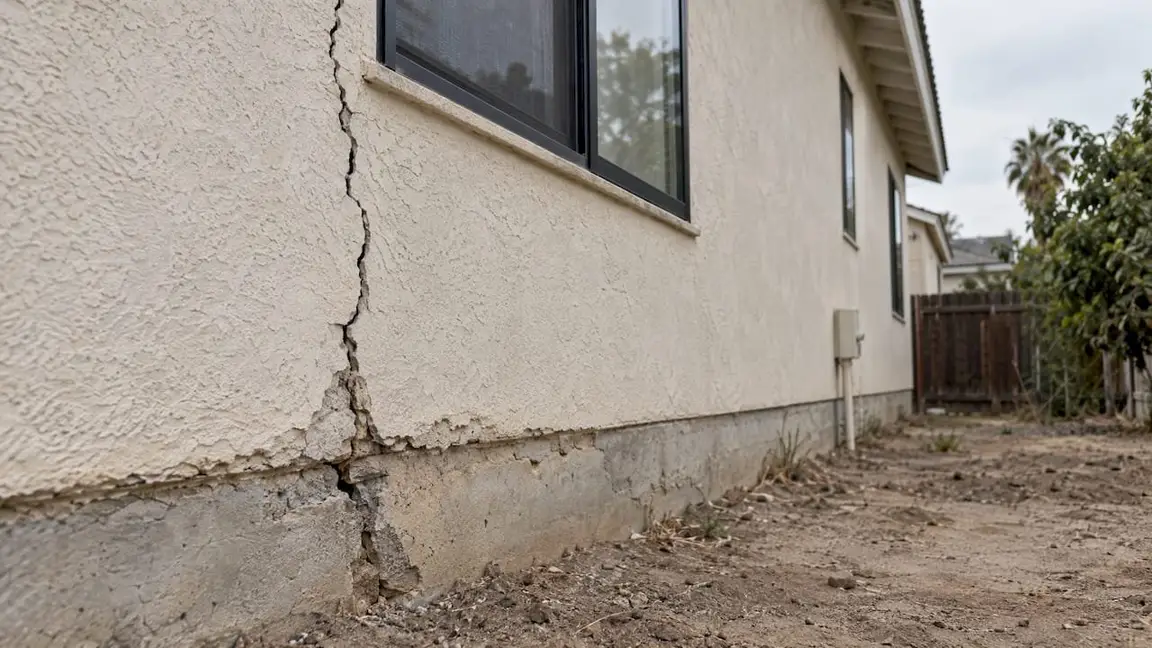
Your foundation is the base that carries the weight of the house. When it shifts, settles or cracks, the rest of the house shows it. Common signs:
- Cracks in drywall that run diagonally from the corners of doors and windows
- Exterior cracks in stucco, brick or the concrete slab itself
- Doors and windows that stick or no longer latch
- Floors that slope, or gaps between the floor and the wall
- Water pooling near the base of the house, or damp crawl spaces
Not every crack is serious. Hairline cracks in new concrete are common. Wide, growing or stair-step cracks, and floors that visibly slope, are the ones that usually call for a structural engineer. A home inspector reports what they can see. A structural engineer diagnoses the cause and says whether the movement is active, which is the report buyers and lenders take seriously.
If you own a home in Southern California, the causes can include expansive clay soil that swells and shrinks, poor drainage, slope movement and earthquake shaking. You do not need to know which one it is to sell. You do need to be honest about what you have seen.
How foundation problems change a sale
The problem is rarely the crack itself. It is what buyers and their lenders do when they find it.
Fewer buyers. Redfin’s guide says a house like this generally may not command the price of a trouble-free home, and that significant structural problems can make traditional financing difficult. Angi makes the same point: structural foundation problems can limit mortgage options, and fewer eligible buyers can mean a lower sale price.
Financing trouble. The Consumer Financial Protection Bureau explains that major repairs can complicate closing. Some loan programs require the property to meet certain standards, and a lender may require repairs before closing or money set aside for repairs afterward. For a buyer with a standard mortgage, that can be a dealbreaker.
Renegotiation or cancellation. When a buyer has an inspection contingency, the CFPB notes that they may negotiate over repairs or walk away without penalty if the inspection results disappoint them, depending on the contract. That is how a house goes under contract at one price and falls out of escrow weeks later. If you have ever had an accepted offer collapse after an inspection, you know how much time that costs.
More days on the market. Realtor.com notes that substantial foundation issues may prevent bank financing, which can leave a listing marketed to cash offers only. In other words, even a traditional listing often ends up depending on cash buyers.
What it can cost to fix
Repair costs vary a great deal by problem and location. Realtor.com cited an average of $4,008 from HomeAdvisor in 2018, but that number is old and covers every kind of job. A 2026 Minnesota guide gives illustrative ranges for that market: $1,700 to $5,000 for carbon-fiber or steel straps and $2,000 to $4,000 per pier for push or helical piers. A house that needs a dozen piers is a five-figure project before you add engineering reports, permits and any damage to finishes. Treat all of these as ballparks, since California prices differ by county, access and soil.

What California requires you to disclose
This is the part sellers most often get wrong, so it deserves plain language.
Under California Civil Code section 1102, covered sellers must give buyers a Transfer Disclosure Statement. As summarized by Nolo, it requires disclosure of material property facts, including the condition of structural components such as the foundation. The law applies to most sales of homes with one to four dwelling units.
What that means in practice:
- If you know about a crack, settling, a past repair or a drainage problem, the form is where it goes.
- Selling “as-is” changes who pays for repairs. It does not change what you have to tell the buyer.
- Written records help you. Keep photos, dates, inspection reports, repair bids, permits, invoices and warranties together. Redfin advises putting known issues and repair paperwork in writing and stating the as-is condition in the purchase agreement.
Disclosure rules vary by state and by transaction, so if your situation is unusual (a house held in a trust, for example, or a sale in the middle of a legal dispute), a California real estate attorney is the right person to confirm what applies to you. When you sell to us, you tell us what you know about the house and we explain the offer in full, so there are no surprises later.
Your options, in order
There are three broad ways to sell a house with foundation trouble.
1. Sell for cash, as-is
A direct cash buyer purchases the house in its current condition. There is no mortgage approval to wait on, no lender appraisal that can be torpedoed by the foundation, and no repair negotiation. For homeowners who need to sell quickly, this is the path that matches the problem: the house has an issue, so you sell to someone who is already planning for it.
With Cash Offer Center, that means:
- No repairs and no cleaning required
- No fees and no commissions
- A cash offer explained to you in full, tailored to your property and situation
- A closing date you choose, and closing in as little as seven days
2. Repair, then list
Realtor.com’s advice for sellers who go this way is to get an inspection and several repair quotes and share them with interested buyers before offers come in. Redfin suggests weighing repair cost, market conditions, time and resources, and gives $10,000 to $20,000 as an example range where repair might be worth considering in a seller’s market. This route means paying contractors up front and living with the timeline of engineers, permits and crews before you even list.
3. List as-is on the open market
You can list the house as-is and offer a price reduction or repair credit. Expect showings, buyer inspections and a pool narrowed by financing rules. A traditional sale typically takes 60 to 90 days and carries agent commissions, and a foundation issue tends to make both the wait and the negotiating harder.
Our guide to selling a damaged house in California as-is goes deeper on the as-is route.
Special situations: foreclosure, inheritance and rentals
Foundation trouble rarely arrives alone. It tends to show up when money, time or energy is already short.
Facing foreclosure. When a payment deadline is close, repair projects and a 60 to 90 day listing may not fit. A sale with a closing date you control can matter more than anything else. Our guides on selling a house with a mortgage and selling with negative equity explain how payoff and proceeds work.
Inherited property. An older inherited house is exactly where hidden foundation movement turns up, and heirs are often far away and unable to manage repairs. Our guide to selling a probate house in California covers the process. On taxes, the IRS generally sets the basis of inherited property at its fair market value at the date of death, with statutory exceptions. A CPA can tell you what that means for your sale.
Rental properties. A landlord with a damaged rental and tenants in place has a different set of problems. See our pages on selling a house with tenants and selling a rental property fast.
Steps to take before you sell
Whichever route you choose, these steps protect you.
- Write down what you know. Note when you first saw each crack, sticking door or sloping floor. Take dated photos with something for scale, such as a ruler, beside the crack.
- Gather paperwork. Collect any earlier inspection reports, engineering letters, repair bids, permits and warranties.
- Be honest on the disclosure form. List known issues. Hiding a known foundation problem is what turns a hard sale into a legal one.
- Decide your timeline. If you need to close in weeks, not months, that rules out most routes that depend on lender financing.
- Get an offer in writing. Whoever buys, review the price, closing date and any conditions before you sign.
With us, steps 1 and 2 help but are not required to get an offer. You do not have to make repairs, clean out the house or arrange inspections first.
Why an as-is cash sale fits foundation problems
Compare the problem to the solution. Foundation trouble causes four headaches in a normal sale: lender hesitation, buyer renegotiation, repair costs and delay. A cash purchase as-is removes each of them. There is no lender to worry about the foundation, no inspection-based walk-away, no repair bill passed to you and no months of showings.
The house does not need to be perfect, empty or even clean. We buy houses, condos, apartments and land in California, and our process is described step by step on how our process works.
Our view
We are a local, family-owned team, and we started this company because homeowners kept getting stuck with houses that nobody wanted to touch.
A foundation problem feels huge when you are living with it. It is a worry that follows you into every room. But it does not have to define how you sell. You can skip the contractor bids, the open houses and the waiting on a buyer’s bank.
Our approach is simple. We look at your house as it is, we explain our cash offer in full so you know how we got to it, and you choose the closing date that works for your life. No agent fees, no commissions, no repairs.
Selling a house is often tied to something hard: a foreclosure notice, a parent’s passing, a move you did not plan. We want you to feel respected and informed from the first call to the day you hand over the keys, and ready to start your next chapter.
Joe
Get a cash offer for your house
If your house has foundation problems and you want to know what a cash sale looks like, we are happy to look at it. We buy houses, condos, apartments and vacant land across California, in any condition, with no repairs and no fees. Start at Cash Offer Center and tell us about your property.
If you own a duplex, townhome or multifamily property, see our page on selling condos, duplexes, townhomes and multifamily properties. You can also read more on our blog.
FAQ
Do I have to disclose foundation problems in California?
Yes, if you know about them and your sale is covered by the law. California Civil Code section 1102 requires most sellers of one- to four-unit homes to disclose material facts on the Transfer Disclosure Statement, including the condition of the foundation. Selling as-is does not remove that duty. If you are unsure how it applies to your case, a California real estate attorney can confirm.
Do I need an inspection before I sell?
For a traditional listing, an inspection and repair quotes help buyers make informed offers, as Realtor.com recommends. If you sell to us, you do not need to arrange inspections or repairs. We buy the house as-is.
Will a foundation problem make my house worth less?
Usually, yes. Fewer buyers can qualify for financing, and buyers may discount offers to account for repair costs. The size of the drop depends on the problem, the repair estimate and the local market. Our cash offers are tailored to each property, and we explain how we arrived at the number.
How fast can I sell a house with foundation issues?
We can close in as little as seven days, and you choose the closing date. A traditional sale often takes 60 to 90 days, and foundation issues can stretch that further when buyers renegotiate or financing falls through.
Can I sell an inherited house with foundation damage?
Yes. Heirs can sell an inherited house as-is, without repairing it first. Probate timing and local requirements apply, so see our guide on selling a probate house in California and talk with the estate’s attorney.
Sources
- Selling a House With Foundation Issues, Redfin
- How to Sell a Home With Foundation Problems, Realtor.com
- Does Foundation Repair Affect Home Value?, Angi
- Schedule a home inspection, Consumer Financial Protection Bureau
- Selling a Home in California? Key Legal Requirements, Nolo
- Selling a Home With Foundation Problems in Minnesota
- Calculating Basis, University of Illinois Tax School
Recommended
- How to Sell a Damaged House in California, As-Is
- How to Sell a House With Negative Equity in California
- Selling a Probate House in California
- No-Obligation Cash Offer on Your House: What It Means
- Alternatives to Foreclosure: Your Options and How to Choose
- How to Sell a House With Code Violations in California